


Seeing the World Through Colored Glasses
It is a peculiar and almost surreal notion to suggest that the simple act of placing a colored pane of glass before one’s eyes could fundamentally alter one’s emotional state, soothe a turbulent mood, or provide a sense of solid ground beneath one’s feet. We are taught to trust our senses as direct windows to reality, making the idea that a specific hue could act as a neurological balm feel more like science fiction than science. Yet, this counterintuitive phenomenon reveals a profound truth about the brain’s intricate wiring: our perception of the world is not a passive act of observation, but an active and deeply vulnerable process of construction.
The light that enters our eyes is not merely for seeing; it is a powerful environmental cue that directly governs the brain’s most basic functions, from regulating stress hormones to maintaining our sense of stability. When this delicate process is disrupted, as it often is after trauma or in cases of sensory sensitivity, the world itself can become a source of distress. In this context, colored glasses are not about changing the world’s appearance, but about filtering out the specific wavelengths of light that are causing a neurological short-circuit, thereby allowing the brain to regain its balance, calm its emotional landscape, and re-establish a sense of safety and presence.
How Colored Glasses Help with Emotional Regulation
The idea that colored glasses can help with emotional regulation is a concept that sits at the intersection of phototherapy, neuroscience, and psychology. While it may sound unconventional, there is a growing body of evidence and clinical practice supporting the use of specific colored lenses, particularly in the context of certain neurological and psychological conditions. The mechanism is not about changing the world in a literal sense, but about altering the brain’s physiological and perceptual response to visual information, which in turn can influence emotional states.
The Neurological Foundation: Light and the Brain
To understand how colored glasses work, it’s essential to recognize that light is not just for seeing; it is a powerful environmental cue that directly regulates brain function. Light enters the eyes and travels not only to the visual cortex but also to other brain structures, most notably the hypothalamus. The hypothalamus is a master regulator that controls the autonomic nervous system, hormone production, and our circadian rhythms (the body’s internal clock).
Different wavelengths of light (which we perceive as different colors) have distinct effects on this system. For instance, blue light is known to be stimulating and can suppress the production of melatonin, the hormone that signals sleep. Conversely, warmer tones like amber and orange can block stimulating blue light, signaling to the brain that it is time to wind down. This fundamental principle is the basis for using colored lenses to influence neurological and emotional states.
Specific Applications and Mechanisms
The application of colored glasses for emotional regulation is most advanced and scientifically validated in the field of Irlen Syndrome, a perceptual processing disorder. Individuals with Irlen Syndrome have difficulty processing specific wavelengths of light, leading to a range of issues that can profoundly affect their emotional well-being.
- Reducing Sensory Overload and Stress: For people with Irlen Syndrome, certain light frequencies can be perceived as “glaring” or “distressing.” This isn’t a conscious experience but a neurological one. The brain expends enormous energy trying to filter out this distressing visual noise, leading to chronic strain, headaches, and a state of constant low-grade stress. This sensory overload can easily trigger emotional dysregulation, irritability, anxiety, and fatigue. By wearing precisely tinted Irlen Spectral Filters, the specific offending wavelengths are filtered out. This immediately reduces the neurological strain, calming the overactive visual processing pathways. The result is a cascade of positive effects: reduced physical discomfort, lower baseline stress levels, and a greater capacity for emotional regulation because the brain is no longer in a constant state of fight-or-flight.
- Improving Cognitive Function and Perception: Trauma and stress can significantly impact cognitive functions like reading, depth perception, and spatial awareness. When the brain is struggling to process visual information correctly, it can lead to feelings of disorientation, frustration, and inadequacy, which are emotionally taxing. Colored lenses can improve the clarity and stability of print and the environment. This reduces the cognitive load required for everyday tasks, freeing up mental resources. When a person can see a page of text without it appearing to move, blur, or swirl, their frustration decreases, and their confidence improves. This reduction in daily cognitive and perceptual stress has a direct and positive impact on emotional stability.
- Regulating the Autonomic Nervous System: Beyond the specific mechanisms of Irlen Syndrome, the principle of using color to influence the nervous system applies more broadly. Lenses that block blue light, such as amber or yellow, are often used to help regulate the autonomic nervous system. By preventing stimulating light from reaching the retina in the evening, these lenses can promote the natural production of melatonin, improve sleep quality, and help establish a healthier circadian rhythm. Since poor sleep and dysregulated circadian rhythms are strongly linked to mood disorders like anxiety and depression, this simple intervention can be a powerful tool for emotional regulation.
The Psychological Component: A Sense of Control
There is also a psychological component to the effectiveness of colored glasses. For individuals who feel overwhelmed by their environment or their own emotional reactions, wearing these lenses can provide a tangible sense of control. It is a non-invasive, immediate-action tool they can use to change their sensory experience. This sense of agency can be incredibly empowering, helping to break the cycle of feeling helpless in the face of overwhelming emotions.
Colored glasses help with emotional regulation by acting as a neurological filter. They reduce sensory overload, calm the brain’s stress response, improve perceptual processing, and help regulate fundamental biological rhythms. They are not a “cure” for emotional issues, but rather a powerful tool that can remove a significant source of physiological and neurological stress, allowing an individual’s innate capacity for emotional balance to emerge.
How Colored Glasses Aid Emotional Regulation After Psychological Trauma
For individuals who have suffered a significant psychological trauma, the world can feel like a hostile and overwhelming place. The brain, having been rewired by the experience, exists in a state of hypervigilance, constantly scanning for threats. This state of heightened alertness is not just a psychological phenomenon; it has profound neurological underpinnings that directly impact how the brain processes sensory information, particularly light. Colored glasses, specifically those used in methods like Irlen Syndrome treatment, can be a surprisingly effective tool for emotional regulation by directly addressing this neurological dysregulation at its source.
The Traumatized Brain in a State of Sensory Overload
To understand how colored glasses help, one must first understand the neurological state of a traumatized brain. During a traumatic event, the brain’s survival mechanisms, centered in the amygdala and brainstem, go into overdrive. To ensure immediate survival, these primitive structures hijack the brain’s resources, suppressing the more rational, calming functions of the prefrontal cortex. This creates a state of hypervigilance and sensory overload.
In this state, the brain does not process information normally. It is flooded with stress hormones like cortisol and adrenaline, which heighten sensory perception. For a survivor, this can mean that ordinary sensory input, bright lights, loud noises, cluttered visual fields, and even certain colors, are perceived as threatening and painful. The environment itself becomes a source of constant, low-grade (or high-grade) stress. The brain is forced to work overtime, not to understand the world, but simply to filter out the perceived “noise” and stay safe. This constant neurological effort is exhausting and is a primary driver of emotional dysregulation, anxiety, irritability, and emotional shutdown.
The Mechanism: Filtering Out Neurological Distress
This is where colored glasses intervene. The core principle is not about changing the world aesthetically, but about filtering out specific wavelengths of light that the traumatized brain is unable to process correctly. This is most clearly understood through the lens of Irlen Syndrome, a perceptual processing disorder that is frequently co-morbid with trauma, PTSD, and anxiety.
- Calming the Visual Cortex and Reducing Cortical Stress: For many trauma survivors, specific wavelengths of light (often parts of the blue and green spectrums) are perceived by the brain as distressing. This isn’t a conscious choice; it’s a neurological hyper-reactivity. When these wavelengths hit the retina, they can trigger a state of “cortical hyperexcitability” or “visual stress.” The brain’s visual processing pathways become overstimulated, leading to physical symptoms like headaches, eye strain, and dizziness, and neurological symptoms like brain fog and difficulty focusing. This constant internal distress is a massive drain on mental resources and keeps the nervous system in a state of agitation. Colored Irlen Spectral Filters act as a precise neurological filter. By blocking the specific offending wavelengths, they prevent this cascade of distress from ever starting. The visual cortex is no longer being bombarded, and the brain can relax. This immediate reduction in internal neurological chaos is the first and most critical step toward emotional regulation.
- Reclaiming Cognitive Resources for Emotional Control: When a traumatized brain is constantly fighting to process visual information, there is little energy left for anything else. The prefrontal cortex, the part of the brain responsible for executive functions like emotional regulation, impulse control, and rational thought, is already suppressed. The added burden of visual stress means it has virtually no chance of functioning properly. By wearing colored lenses, the cognitive load of simply seeing is dramatically reduced. The brain no longer has to expend energy filtering out distressing light. This frees up precious cognitive resources, allowing the prefrontal cortex to come back online. Suddenly, an individual has the mental capacity to pause before reacting, to use coping skills, and to feel a sense of control over their emotional responses rather than being a slave to their reflexive fear.
- Stabilizing Perception to Ground the Individual: Trauma can shatter a person’s sense of stability and safety in the world. This is often exacerbated by perceptual distortions. Many trauma sufferers report that their environment feels unstable, text on a page might appear to move, floors can seem to shift, and peripheral vision can be filled with distracting motion. These distortions are deeply unsettling and reinforce the feeling that the world is not a safe place. Colored lenses can have a remarkable stabilizing effect. By calming the brain’s visual processing, they can make text appear clear and stationary and the environment feel solid and predictable. This perceptual stability has a profound grounding effect. When the external world stops feeling like a threat, the internal nervous system can begin to down-regulate its hypervigilant state. This creates a safe foundation from which emotional healing can begin.
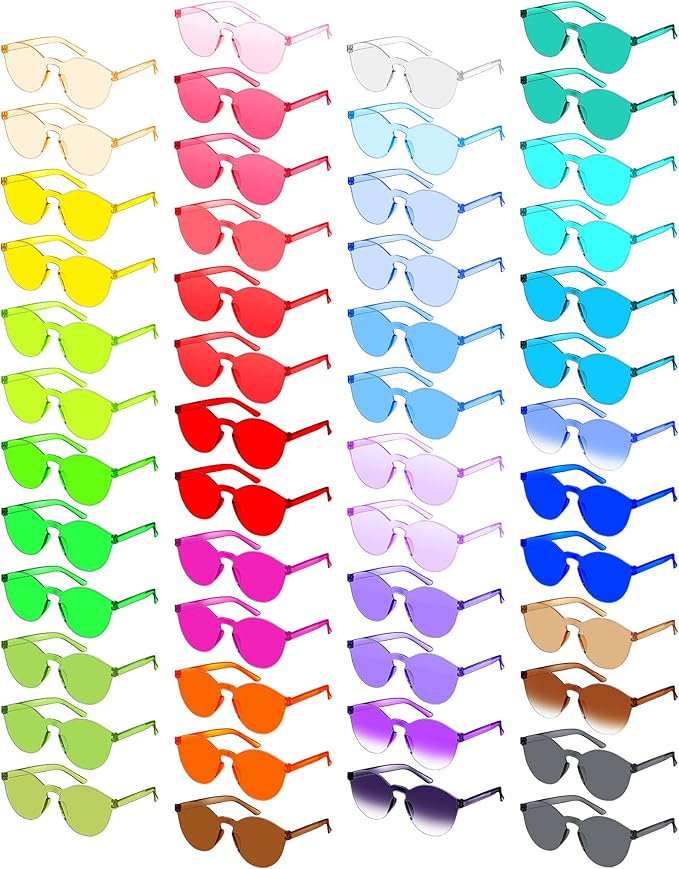
See below for inexpensive Chromatherapy glasses.
The Psychological Impact: A Tool for Safety and Control
Beyond the direct neurological mechanisms, there is a powerful psychological component to using colored glasses. For a person who feels constantly overwhelmed and at the mercy of their own nervous system, these lenses are a tangible tool for self-regulation. Putting them on is an act of taking control, of creating a personal sanctuary of visual calm. This sense of agency is incredibly empowering for trauma survivors, who often feel helpless. It provides a non-pharmaceutical, immediate-action intervention that they control, helping to rebuild a sense of self-efficacy and safety in their own body.
Colored glasses help trauma sufferers by directly targeting the sensory overload that keeps their nervous system locked in a state of distress. They are not a panacea, but they are a powerful foundational tool that can reduce the neurological static, reclaim cognitive resources for emotional control, and stabilize perception. By calming the brain’s physiological response to light, they create the internal quiet and safety necessary for true emotional regulation and psychological healing to take place.
Selection of Colored Lenses
Of course. It is crucial to understand that the selection of colored lenses for therapeutic use is a highly individualized process. There is no single “best” color for a specific mechanism or condition. The effectiveness of a specific hue depends entirely on an individual’s unique neurological response to light wavelengths. What is calming for one person can be agitating for another.
That said, we can discuss the general categories of colors and their typical applications based on the three mechanisms described. The gold standard for precise color selection is a formal diagnostic process, like the one used for Irlen Spectral Filters, which involves a systematic evaluation to find the exact combination of tints that provides neurological relief.
Here is a breakdown of the colors typically associated with each mechanism:
1. For Calming the Visual Cortex and Reducing Cortical Stress
This is the most complex and personalized category. The goal here is to filter out the specific wavelengths of light that are causing cortical hyperexcitability (“visual stress”) for an individual. The offending wavelengths can be anywhere in the spectrum, so the solution is not limited to one color family.
- The Colors: The entire spectrum is in play. This includes a vast array of blues, greens, purples, pinks, oranges, yellows, and grays.
- How it Works: The diagnostic process is not about choosing a favorite color. It is a functional assessment where an individual is tested with a wide range of colored overlays and then lenses. The correct filter is the one that immediately reduces perceptual distortions (like text moving or blurring), alleviates physical discomfort (headaches, eye strain), and creates a sense of visual “calm.”
- Key Concept: The color is not chosen for its psychological association (e.g., blue for calmness). It is chosen for its specific neurological effect. For one person, a specific shade of aqua might be the perfect filter. For another, that same aqua could be useless, while a muted rose or a specific gray-green provides the relief. This is why professional assessment is critical for this mechanism. It is a medical and neurological intervention, not a simple preference.
2. For Regulating the Autonomic Nervous System (Circadian Rhythm)
This mechanism is less about individualized perceptual processing and more about the well-established biological effects of light on the brain’s sleep-wake cycle. The colors used here are more generalized and predictable.
- The Colors: Amber, orange, red, and sometimes yellow. These are the colors of the “sunset” spectrum.
- How it Works: The retinal ganglion cells in our eyes contain a photopigment called melanopsin, which is particularly sensitive to blue light. When blue light enters our eyes, it sends a powerful signal to the suprachiasmatic nucleus (SCN) in the hypothalamus, the body’s master clock, that it is daytime. This suppresses the production of melatonin, the hormone that makes us sleepy. By wearing amber or orange-tinted glasses in the evening (typically 2-3 hours before bed), you effectively block the stimulating blue-spectrum light from reaching the retina. This “tricks” the brain into thinking the sun has set, allowing the natural production of melatonin to begin. This helps regulate the sleep-wake cycle, improves sleep quality, and, by extension, supports mood stability and emotional regulation the following day.
3. For Stabilizing Perception to Ground the Individual
This mechanism is a direct result of the first. When the visual cortex is calmed and the brain is no longer in a state of distress, perception naturally stabilizes. Therefore, the colors indicated for this mechanism are the exact same colors identified through the individualized diagnostic process described above.
- The Colors: Whatever color corrects the individual’s specific visual stress.
- How it Works: The perceptual distortions that make the world feel unsafe (moving text, distorted floors, etc.) are symptoms of the brain’s inability to process light correctly. The precise colored filter acts as a “corrective lens” for the brain’s processing. When the correct filter is in place, the environment is perceived as stable and solid. For example, if a person’s visual stress is alleviated by a specific violet-tinted lens, that violet lens is what will provide the grounding effect. If another person needs a combination of a yellow and gray overlay, that combination will be their key to perceptual stability. The color itself is irrelevant; its neurological function is everything.
The COLORS
1. For Calming the Visual Cortex and Reducing Cortical Stress
The colors indicated for this mechanism are highly individualized and can include any color from the spectrum, such as blues, greens, purples, pinks, oranges, yellows, and grays. The selection process is not based on preference but on a formal diagnostic assessment. This assessment is designed to find the specific wavelength filter that reduces an individual’s unique neurological distress. The correct color is the one that immediately alleviates perceptual distortions and physical discomfort, creating a sense of visual calm.
2. For Regulating the Autonomic Nervous System (Circadian Rhythm)
The colors typically indicated for this mechanism are more generalized and predictable, primarily including amber, orange, red, and sometimes yellow. These colors are chosen based on the well-established biological effect of blocking blue light. By wearing lenses in these “sunset” hues in the evening, an individual can prevent stimulating blue light from suppressing melatonin production, thereby helping to regulate the sleep-wake cycle and improve sleep quality.
3. For Stabilizing Perception to Ground the Individual
The colors indicated for this mechanism are the exact same colors identified through the individualized diagnostic process described for calming the visual cortex. The stabilizing effect is a direct result of using the correct filter that alleviates visual stress. When the brain is no longer in a state of distress, perception naturally stabilizes. Therefore, the specific color that provides this grounding effect, whether it’s a certain violet, rose, or gray-green, is unique to the individual and determined by their neurological response.
Conclusion
While amber/orange glasses for sleep regulation can be used more broadly, the use of colored lenses to directly address the sensory and emotional dysregulation stemming from trauma is a highly personalized therapeutic intervention. The most profound and targeted results come from a professional assessment that identifies the unique neurological signature of an individual’s light sensitivity.
So, go to Amazon and buy yourself some cool shades!
- https://www.amazon.com/Therapy-Chromotherapy-Enhancement-Sunglasses-Sensitivity/dp/B073PNB2L1/
- https://www.amazon.com/dp/B0BTYRVTJZ/ref=sspa_dk_rhf_search_pt_sub_3/
Prof. Tim McGuinness, Ph.D.
December 2025


Leave A Comment